Sleep Tracking Truth

Elena Rossi
| 25-06-2026
 · Science Team
Many people wear a smart band while sleeping and check the results as soon as they wake up.
They often look at the estimated time spent in deep sleep, light sleep, and periods of wakefulness during the night. But have you ever wondered how a small device worn on the wrist can estimate this information?
Sleep-tracking technology is based on scientific principles, but the results should be viewed as estimates rather than precise medical measurements. Understanding how smart bands collect and analyze data can help us use the information more effectively and develop healthier sleep habits.
The Two Key Sensors Behind Sleep Tracking
Most smart bands rely primarily on two important sensors: an accelerometer and a heart rate sensor.
- Accelerometer: This sensor records body movement throughout the night. It detects actions such as turning over, moving the arms, or getting out of bed. Even small movements provide valuable clues about whether a person is asleep or awake.
- Heart Rate Sensor: This sensor continuously measures heart rate while you sleep. Because heart rate generally changes during different stages of sleep, the data can help estimate whether a person is in light sleep, deeper sleep, or awake.
By combining information from these sensors, the smart band creates an overall estimate of sleep patterns during the night.
What Happens During Different Sleep Stages?
Our bodies experience several sleep stages throughout the night, each with its own characteristics.
- Deep Sleep: During deep sleep, the body becomes highly relaxed. Body movement is usually limited, breathing becomes more regular, and heart rate generally slows. This stage is important for physical recovery and helps many people wake up feeling refreshed.
- Light Sleep: During light sleep, the body remains relaxed but is more responsive to the surrounding environment. People may change sleeping positions or make small movements, and heart rate may vary more than during deep sleep.
When a person wakes up, even briefly, body movement often increases and heart rate patterns may change. Smart bands use these changes to estimate periods of wakefulness.
It is important to note that consumer smart bands cannot directly measure sleep stages. Instead, they estimate them using movement and heart rate data.
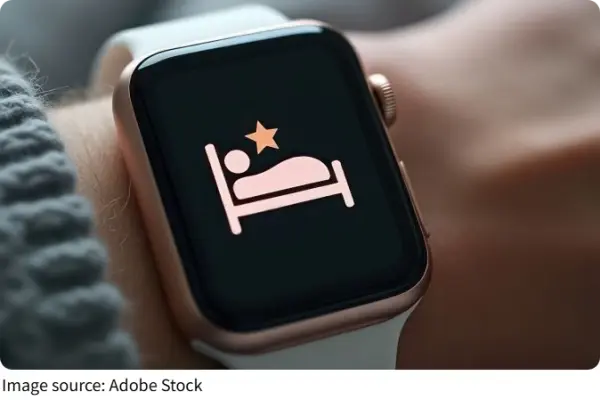
How Does the Device Create a Sleep Report?
Throughout the night, the smart band's software analyzes the information collected by its sensors and compares it with established sleep-analysis algorithms.
For example, if the device detects very little movement while heart rate remains relatively steady over an extended period, it may estimate that the user was in deeper sleep. If movement becomes more frequent and heart rate varies more, the device may estimate lighter sleep or wakefulness.
After processing the data, the software estimates the amount of time spent in different sleep stages and records possible awakenings. The results are then presented as a sleep report that provides an overview of the night's sleep.
Why Sleep Data Is Not Always Perfect
Although modern smart bands use advanced sensor technology, they have important limitations.
Clinical sleep studies use specialized equipment that measures brain activity, eye movement, breathing, muscle activity, blood oxygen levels, and other physiological signals. Smart bands do not directly measure most of these indicators.
As a result, the estimates are not always accurate.
For example, lying still while reading or relaxing may be interpreted as sleep. Likewise, frequent movement during sleep may sometimes be identified as wakefulness.
The way a smart band is worn can also influence the results. If the band is too loose or does not maintain consistent contact with the skin, sensor readings may become less accurate.
For these reasons, sleep reports should be viewed as helpful estimates rather than exact assessments.
How Can We Use Sleep Reports Wisely?
The greatest value of sleep tracking is identifying long-term patterns rather than focusing on a single night's results.
For example, if sleep reports consistently indicate shorter periods of deep sleep over several weeks, it may be helpful to review daily habits. Going to bed at a consistent time, reducing screen use before bedtime, and creating a comfortable sleeping environment may support better sleep quality.
Looking at trends over weeks or months often provides more meaningful insights than relying on one night's data. Over time, these patterns can help people better understand how their daily routines may influence their sleep.
Smart Bands Are Helpful Guides, Not Medical Tools
Smart bands have made sleep tracking more accessible and encourage greater awareness of personal sleep habits.
However, they are not designed to diagnose sleep disorders or replace professional medical evaluation. If someone experiences persistent sleep difficulties, frequent nighttime awakenings, excessive daytime sleepiness, or other ongoing sleep concerns, consultation with a qualified healthcare professional remains the most reliable way to obtain an accurate assessment.
The primary purpose of a smart band is to provide useful information that supports healthy lifestyle choices, not to deliver a medical diagnosis.
Final Thoughts
Smart bands offer a practical way to learn more about sleeping habits and monitor changes over time. Although the data are estimates rather than precise medical measurements, they can provide valuable insights into overall sleep patterns.
By focusing on long-term trends instead of individual results, users can make informed adjustments to their daily routines and work toward better sleep and overall well-being.