Nature's Jaw Powerhouses

Owen Murphy
| 19-03-2026
 · Animal Team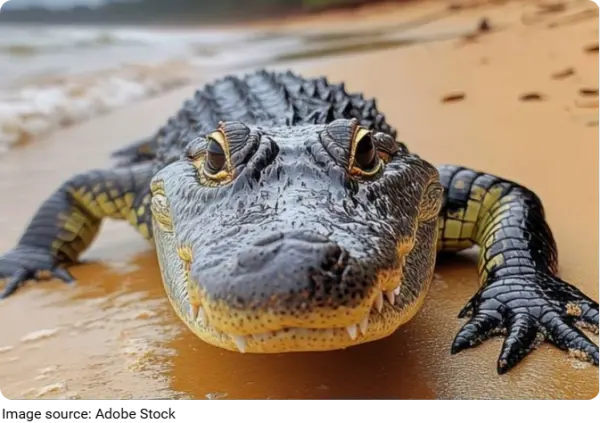
Walking through a wildlife documentary, one moment always grabs attention: an animal clamps down with unbelievable force.
From snapping turtles to apex predators, bite strength is a key survival tool.
Studying the strongest bites in nature reveals how animals hunt, defend, and interact with their environment.
Crocodiles: Living Relics with Crushing Power
Crocodiles are the undisputed champions of bite force. The saltwater crocodile can deliver over 16,000 newtons, enough to crush hard tissue. Their jaws are designed to seize and hold prey, while their body muscles provide stability during the struggle.
Hunting technique: Crocodiles often ambush prey near water edges, striking with explosive speed. They rely on sheer jaw strength rather than speed to overpower larger animals.
Actionable tip: Wildlife observers should always maintain a safe distance near rivers and mangroves. Binoculars help study their feeding behaviors safely.
Great White Shark: The Ocean's Pressure Jaw
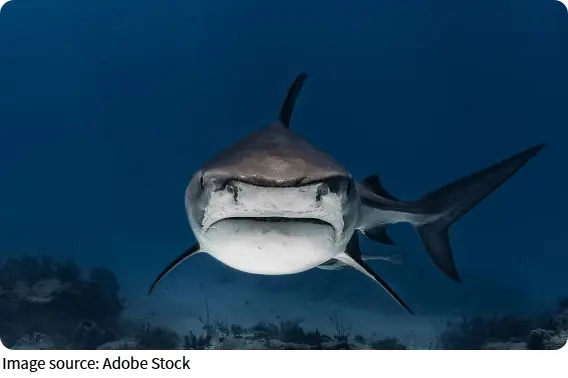
The great white shark exhibits a bite force of around 18,000 newtons in larger specimens. Their triangular serrated teeth are ideal for slicing through tough flesh, making them effective hunters of marine mammals.
Hunting technique: They often approach prey from below and strike with explosive lunges, using the water to mask their approach.
Actionable tip: Shark cage diving allows safe observation. Focus on the angles of attack and jaw mechanics to understand their predatory efficiency.
Hyenas: Small Bodies, Mighty Jaws
Spotted hyenas may not be the largest predators, but their bite force is extraordinary—about 1,100 newtons. This allows them to crush bones to access marrow, a rich nutrient source.
Behavior note: Hyenas feed in groups, often competing with lions. Their bite strength ensures that even smaller individuals can survive on tough remains.
Actionable tip: Visiting African savannas with a guided safari gives insight into hyena feeding dynamics and social hunting behaviors. Observe how they coordinate and protect their meals.
Alligator Snapping Turtle: The Bite from Below
Alligator snapping turtles have one of the strongest bites among reptiles relative to body size, reaching around 1,000 newtons. Their jaws are perfect for grasping fish, amphibians, and small mammals.
Feeding strategy: They remain almost completely still, luring prey with a worm-like appendage on their tongue before snapping shut.
Actionable tip: Watching them in river habitats requires patience. Their ambush style teaches the value of timing and patience in observing predatory behavior.
Jaguar: The Feline Specialist
Among big cats, jaguars have the strongest bite relative to body size, around 2,000 newtons. They can pierce skulls and shells, a skill that allows them to hunt armored reptiles like turtles and caimans.
Hunting technique: Jaguars typically bite directly through the skull of prey, a method unique among cats. Their muscular neck and jaw coordination enable this precise strike.
Actionable tip: Tracking jaguar activity in protected reserves helps study their hunting patterns. Note how stealth and jaw strength combine for efficiency.
Lessons from Nature's Bite Masters
Examining animals with extreme bite forces highlights the diversity of survival strategies. Each species adapts its jaw strength to its environment, diet, and prey type. Observing them can inspire curiosity about evolution, biomechanics, and ecological balance.
Personal takeaway: Next time you see a predator's jaw in action—whether on film or in the wild—remember it's not just raw power. It's precision, adaptation, and millions of years of evolutionary refinement, all designed to survive in a challenging world.