Ancient Olive Tree Secrets

Caleb Ryan
| 19-03-2026
 · Plant Team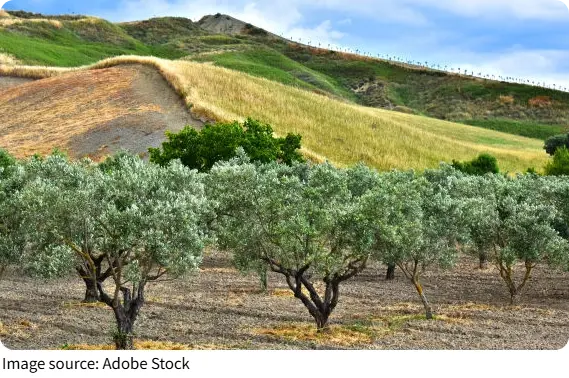
Have you ever stopped to think about how a simple tree can shape history, culture, and daily life? Today, we’re diving into the fascinating world of the olive tree.
From its ancient roots to its everyday uses, the olive has a story that stretches thousands of years and continues to influence our lives in so many ways. Let’s explore it together!
Origins and Growth
The olive tree, scientifically called Olea europaea, is a subtropical evergreen native to the Mediterranean region. It first grew in what is now the eastern Mediterranean about 8,000 to 6,000 years ago. Over centuries, humans carried it across the region, spreading it to places like Crete around 3,500 BCE and the Iberian Peninsula by 1,050 BCE.
These trees can grow up to 8–15 meters tall, though some special varieties in southern Italy, like Pisciottana, grow even taller and wider. The leaves are silvery-green, long and narrow, and the trunk often twists in multiple sections, giving the tree a characterful look.
Flowers and Pollination
Olive trees bloom with small white flowers, usually on wood from the previous year. Each flower has four pale yellow petals fused at the base and four green sepals. The flower clusters slowly grow over 4–6 weeks until they reach about 2 centimeters in length. In hot climates, flowers bloom for 5–6 days, while in cooler areas, they can last up to two weeks. Pollination and fertilization also occur faster in warmer regions, making climate an important factor for fruit production.
Fruits and Harvesting
The olive fruit is a small drupe, similar in structure to cherries or peaches, and matures to a length of 1–2.5 centimeters. Wild olives have thinner flesh and are smaller than cultivated varieties. Farmers usually harvest olives when they are green or dark purple. Inside, each fruit contains a hard pit called a pyrena, often referred to as a “stone.” Around 80% of harvested olives are processed into oil, while the remaining 20% are eaten directly as table olives.
Historical and Cultural Significance
Olives have been essential to Mediterranean civilizations for thousands of years. They played a major role in societies from the Minoans and Mycenaeans to classical Greeks and Romans. Beyond nutrition, olive oil was used for lighting lamps, personal care, cosmetics, soap, lubrication, and even medicine. The wood has occasionally been used in construction.
Due to their resilience and long lifespan—some trees live for thousands of years—olives also carry symbolic and spiritual meaning. Ancient Greeks considered them sacred, representing peace, prosperity, and wisdom. Olive branches were used in rituals, funerals, and public ceremonies, including ancient athletic events.
Modern Cultivation
Today, olives are grown across the Mediterranean and have spread to Australia, New Zealand, the Americas, and South Africa. Spain, Italy, and Greece are global leaders in commercial production, with Turkey, Tunisia, Morocco, Algeria, and Portugal also contributing significantly. Thousands of olive varieties exist, each suited mainly for oil, table consumption, or both. Some are grown purely as ornamental shrubs. The versatility of the olive tree makes it an enduring presence in landscapes, cuisines, and local traditions.
Everyday Uses Today
Even now, olives remain more than just a food source. Olive oil continues to be a key ingredient in Mediterranean cuisine, while some varieties are cultivated for decorative purposes. People also enjoy olives in salads, snacks, or pressed for oil, which can enhance dishes or even be used for skincare. Its versatility and nutritional benefits make the olive tree an ongoing companion in kitchens and homes around the world.

Celebrate Olive Wonders
We hope this journey into the olive tree’s history, culture, and uses has sparked your curiosity. From ancient civilizations to modern dining tables, olives connect us to thousands of years of human life and creativity. The next time you enjoy an olive or drizzle some oil, remember you are part of a story that has lasted millennia.